Key Features & Benefits
Homeguard offers a robust, dual-layered defence by incorporating Bifenthrin into a high-strength polymer sheet.
Long-Term Protection
Engineered for an extended product life, safeguarding your property structure for decades.
Advanced Physical Barrier
A cutting-edge polymer system that repels and kills termites without saturating the surrounding soil.
Less Intrusive
Installed during the construction phase with minimal site disruption. A hassle-free solution.
Environmentally Responsible
Polymer design locks the active ingredient into the sheet, reducing environmental leaching.
Installation of Homeguard Termite Management System
Homeguard provides flexibility in application. Below are the key installation areas and specific site requirements for optimal protection.
1. Perimeter
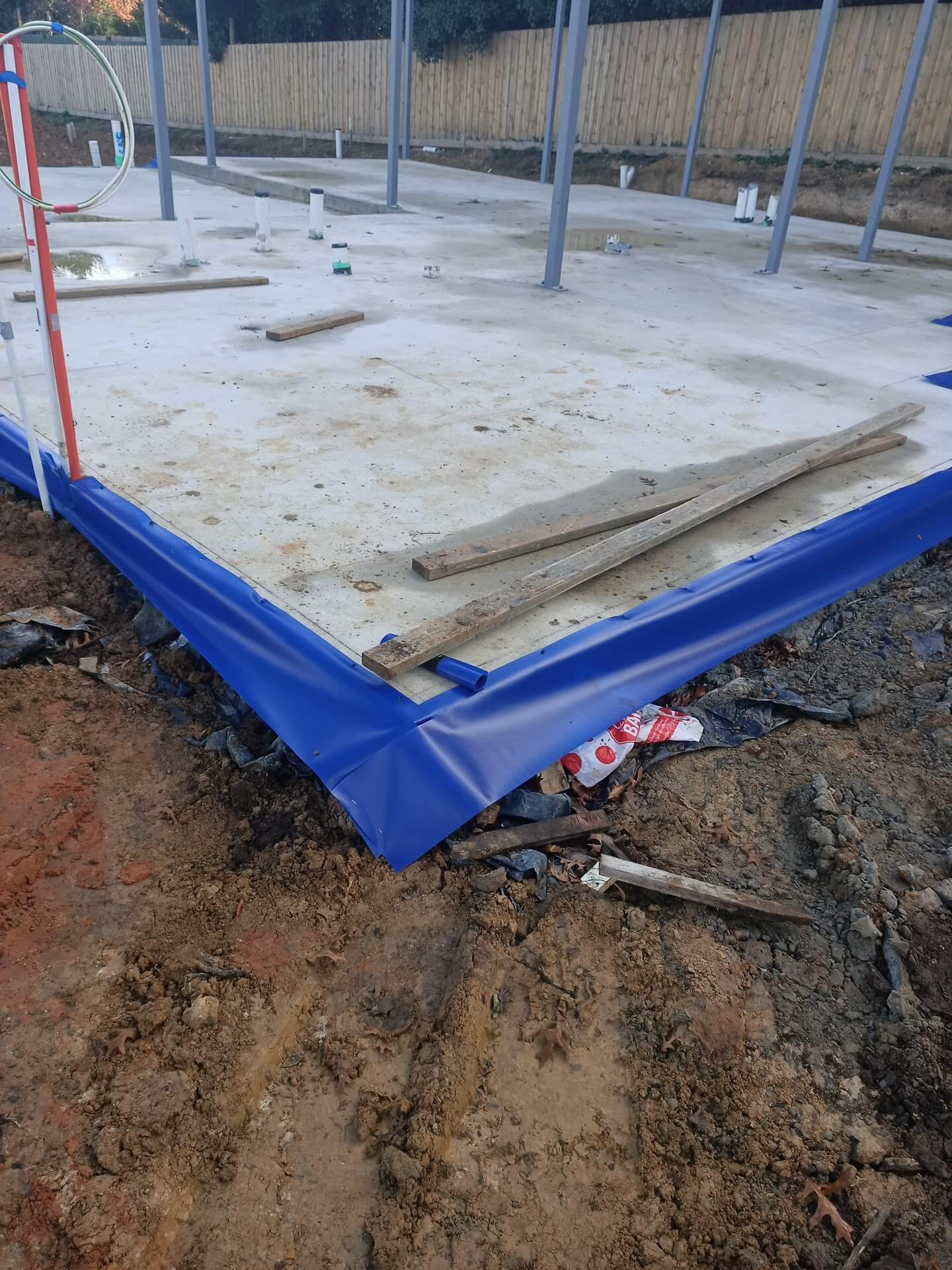
A continuous Homeguard barrier is laid along the building perimeter to impede termite ingress from the slab edges.
Clean, smooth slab edge with 75mm of exposed concrete, free of formwork and debris.
The Homeguard sheet is adhered or fixed to the top edge of the slab, ensuring complete coverage without interfering with walls or frames.
2. Retaining Walls
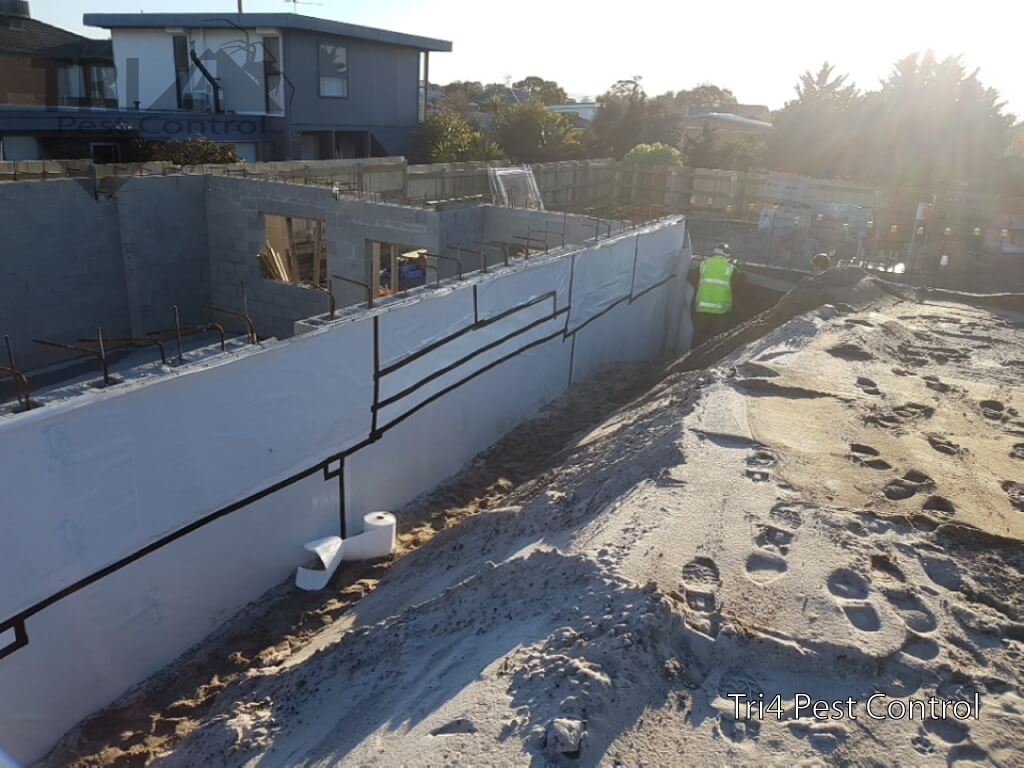
For retaining walls adjacent to structures, Homeguard helps prevent termites from using these walls as hidden entry points.
Walls must be adequately waterproofed and free from any condition that could undermine the barrier’s function.
The barrier is fitted along any joins to ensure no pathways remain for termite ingress.
3. Under Slab Treatments
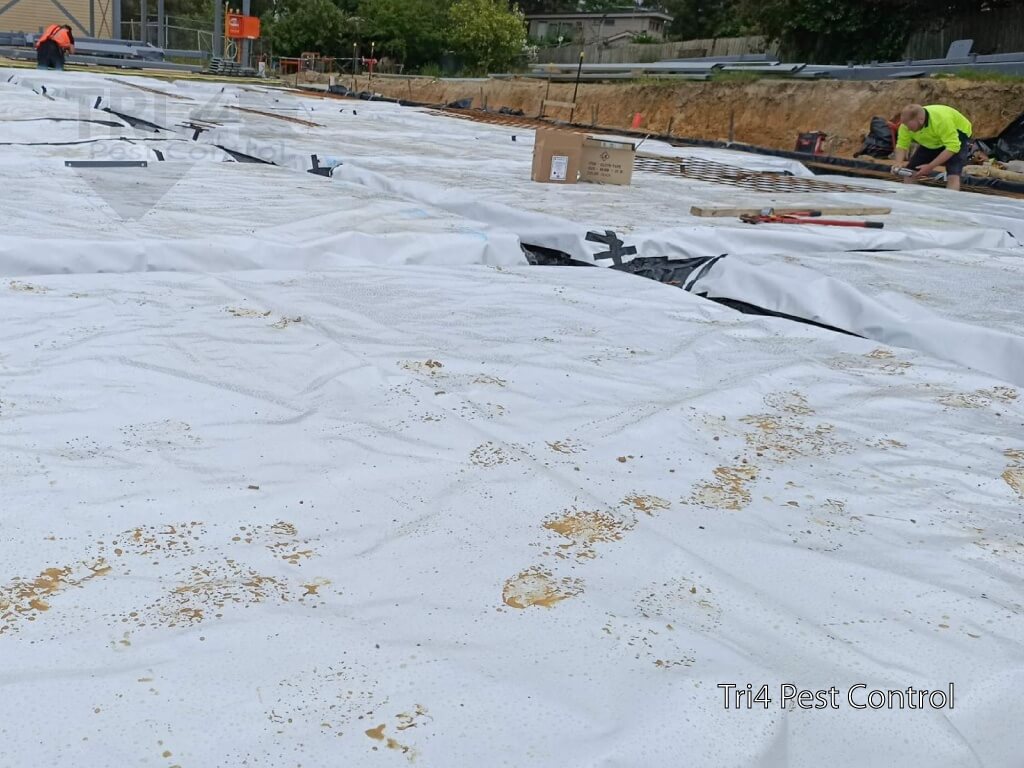
Homeguard can be laid beneath the slab to create a foundation-wide barrier.
Correctly installed moisture barrier, no steel on top of membrane zones, and a smooth, clean concrete surface.
Ensures full coverage underneath the slab, with proper overlaps and sealed edges to prevent gaps.
Builder & Trade Responsibilities
Builders must ensure all trades understand their impact on the termite system.
Brick Layers
Briefed on integrating the barrier into brick courses. Proper embedding without puncturing the membrane is critical.
Plumbers
Pipes must be installed without breaching the barrier. Specialized collars must be placed prior to pouring the slab.

Concreters
Must ensure the slab edge is properly exposed (75mm). A debris-free, smooth surface is fundamental for the seal.

Steel Workers
Columns or reinforcements need to be installed with the Homeguard membrane in mind to prevent gaps.

Carpenters
Frames should be placed without damaging the underlying barrier. Fixings must not create new termite entry points.
Coordination with Tri4
Our rapid response team is always on standby. Immediate action is crucial if the product is damaged, facilitating swift repair and recertification.
Maintenance & Inspection
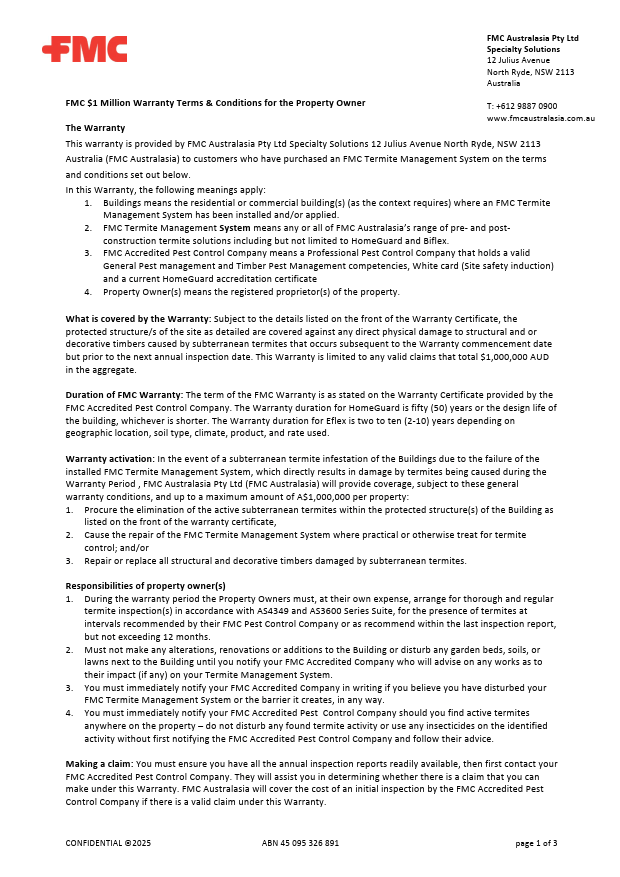
Homeguard requires minimal maintenance. However, for warranty and continued performance, annual termite inspections (AS 3660.1) are recommended.
Inform us of any structural changes—extensions or landscaping—so the barrier can be reassessed.
Homeguard Resource Centre
Download official documentation, CodeMark certificates, and brochures for the Homeguard Termite Barrier.
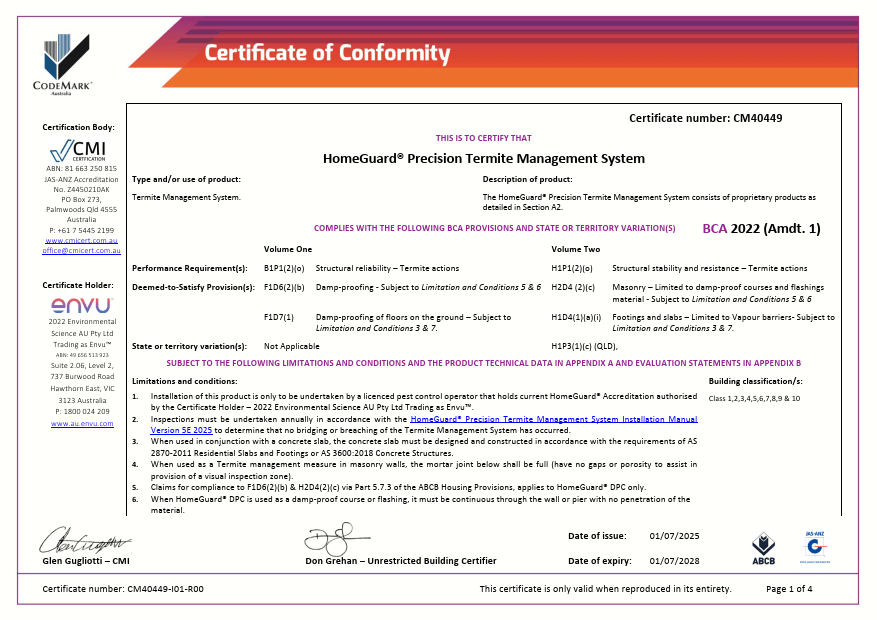





CodeMark Certified
Exceeds AS 3660.1 Standards